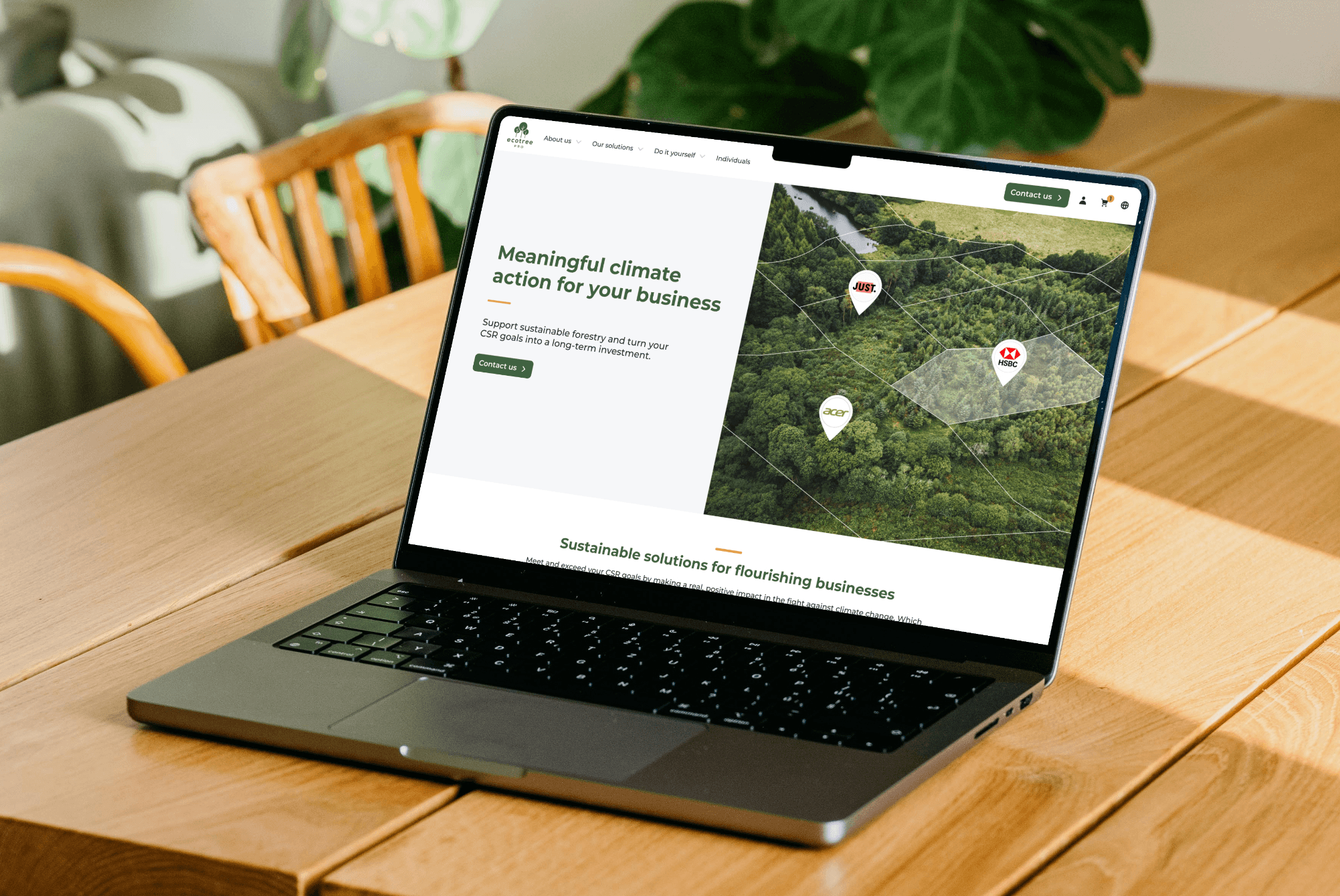
UX Strategy · Information Architecture +48% leads · +55% traffic · +19% conversion
04 — ECOTREE
The Problem
Corporate visitors struggled to understand what EcoTree offers, why it's credible, and how to act. The challenge wasn't visual : it was cognitive. Visitors had to simultaneously process carbon capture, ecosystem science, EcoTree's solutions, and the business case for their company.
The Solution
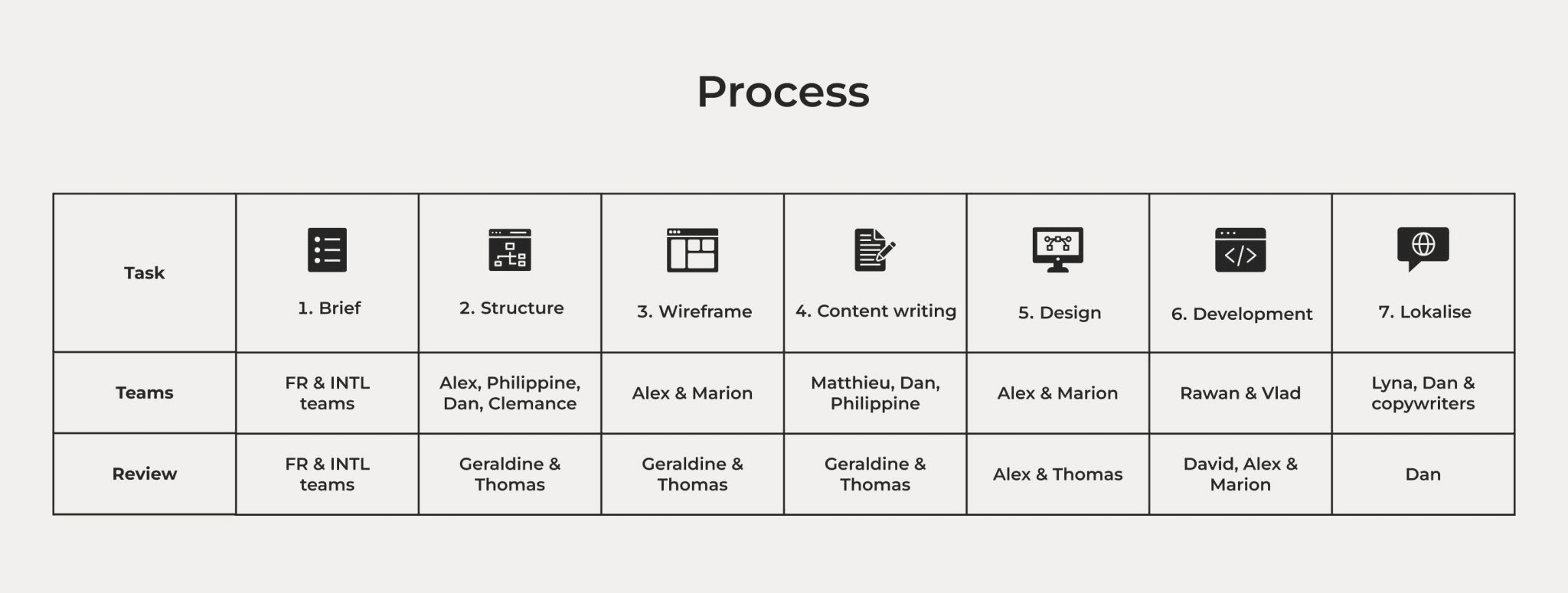
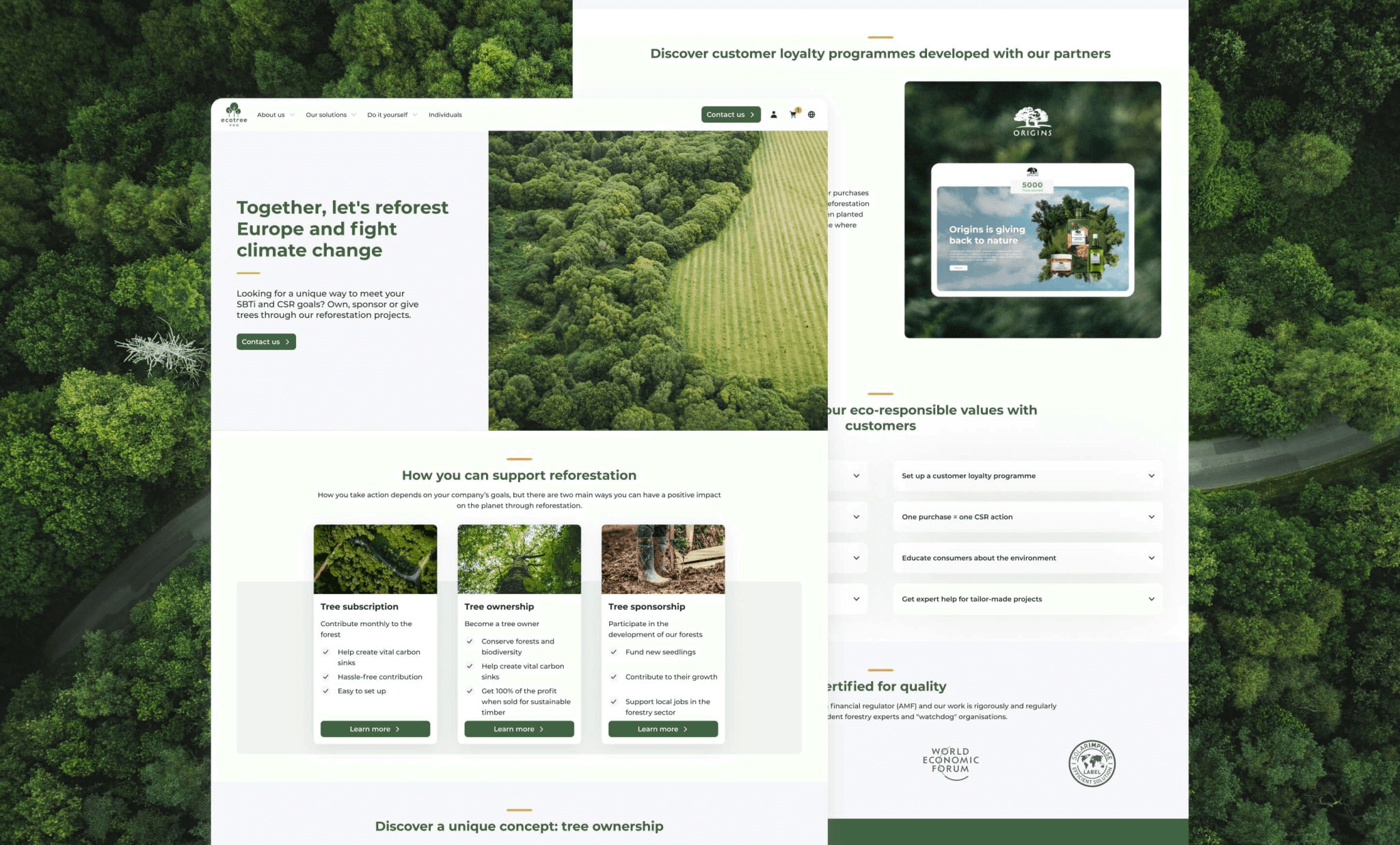
We restructured the information architecture as a progressive learning journey : one concept at a time, in a sequence that builds toward a decision.
Scientific concepts were made scannable through educational infographics and ecosystem diagrams.
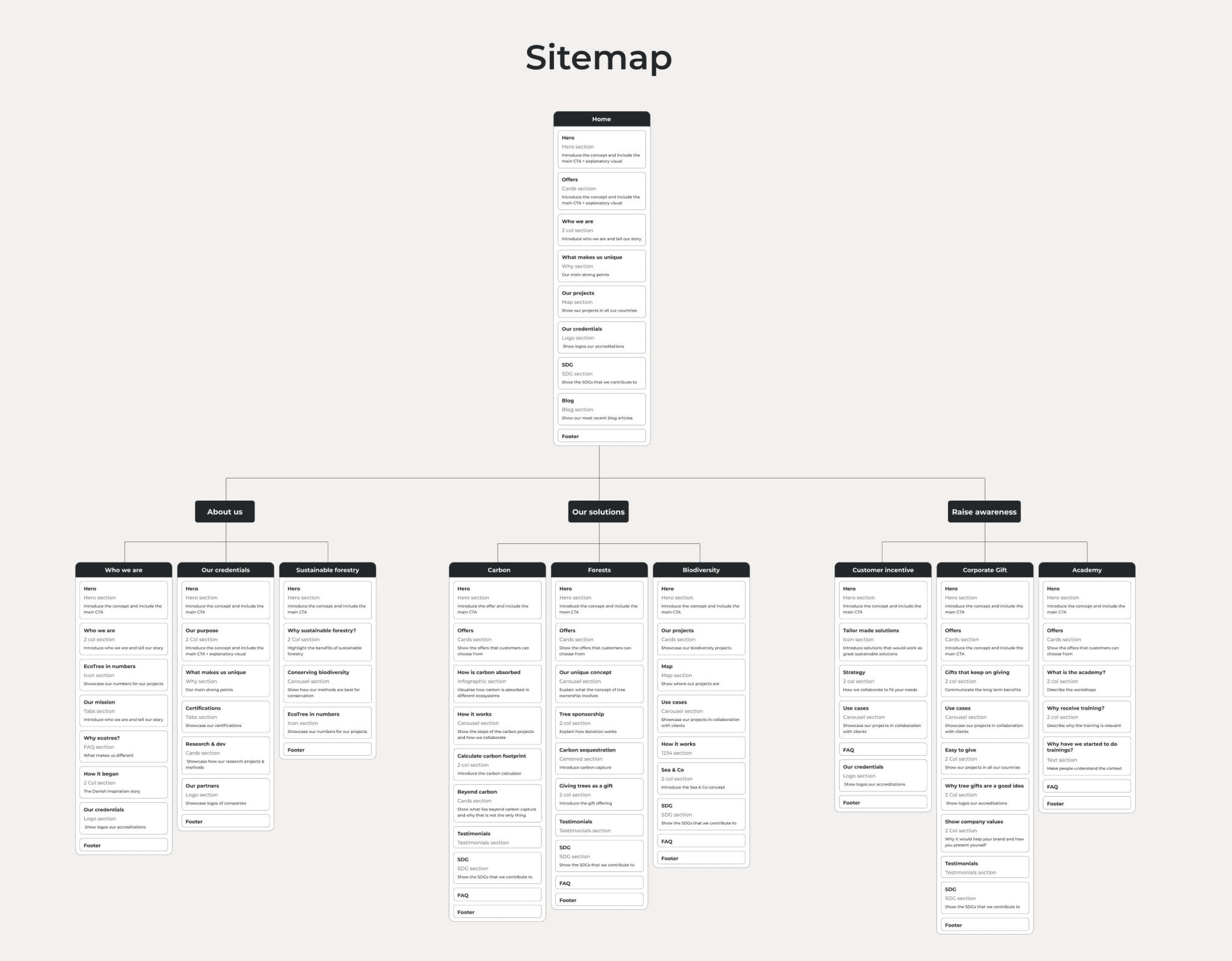
Each page was structured around three questions: What is the climate problem? How does EcoTree address it? Why does it matter for your company?

My thinking
I reframed the project early: this isn't a design problem, it's a comprehension problem. That shift changed every decision that followed : information architecture before visual design, progressive disclosure before aesthetics.
The +48% lead increase didn't come from better visuals. It came from restructuring how visitors moved through the content.

Accessibility
Infographics designed with text alternatives and high contrast. Progressive structure reduces cognitive load for users with cognitive disabilities.
Keys Learning
In complex domains, strong information architecture is the design. A beautifully designed page that presents information in the wrong order will always underperform a simple page that guides users to the right conclusion.
Impact
48% increase in incoming leads
55% increase in traffic in 9 months
19% increase in conversion
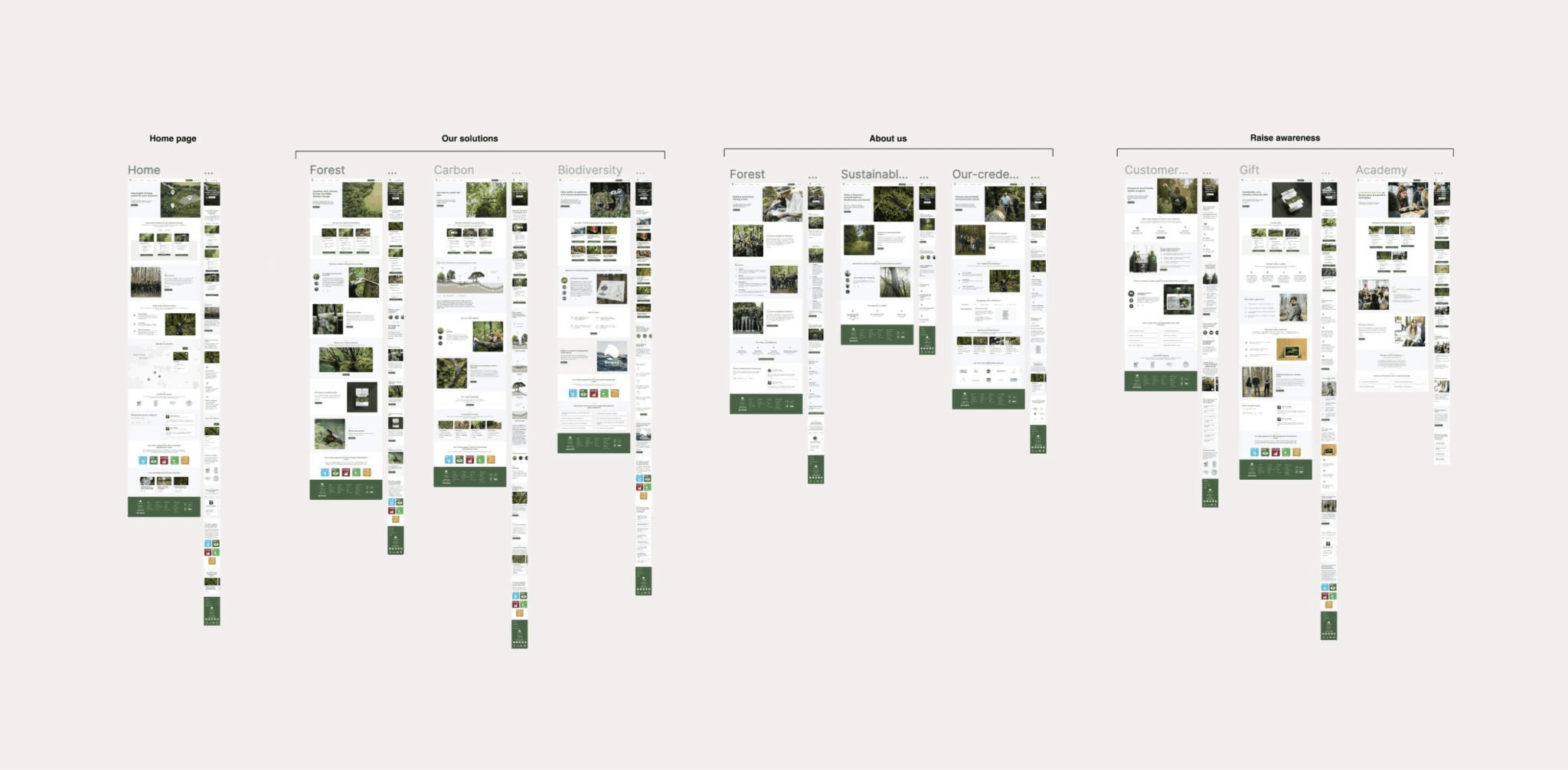
Scope of Work